
Who would have thought that beekeeping, engineering, and the visual arts would form such a symbiotic partnership ? Artist Ricardo Siri proves that this combination is perfectly possible with the PRO-POLIS exhibition! The exhibition will open at the City Historical Museum in Gávea starting June 27, and we’ll share more details below!
There are about 20 previously unseen works, made with honey, beeswax, and propolis
Curated by Fernanda Lopes, the “PRO-POLIS” exhibition opens to the public this month, featuring about 20 previously unseen works. Ranging from paintings to sculptures, they were created using purely organic elements collected from beehives: honey, beeswax, and propolis.
It all began about eight years ago, when transdisciplinary artist Ricardo Siri started studying and breeding native Brazilian bees. A process of dedication that even earned him the award for the third-best honey in Brazil!
Now, this experience extends into the realm of art. In the exhibition, propolis —a substance used to protect and strengthen beehives—takes on the role of a pictorial medium in abstract works featuring natural shades of brown, green, and red.
Some canvases even use geopropolis, a mixture of soil and propolis, revealing the botanical memories of the landscapes visited by species such as the mandaçaia bee.
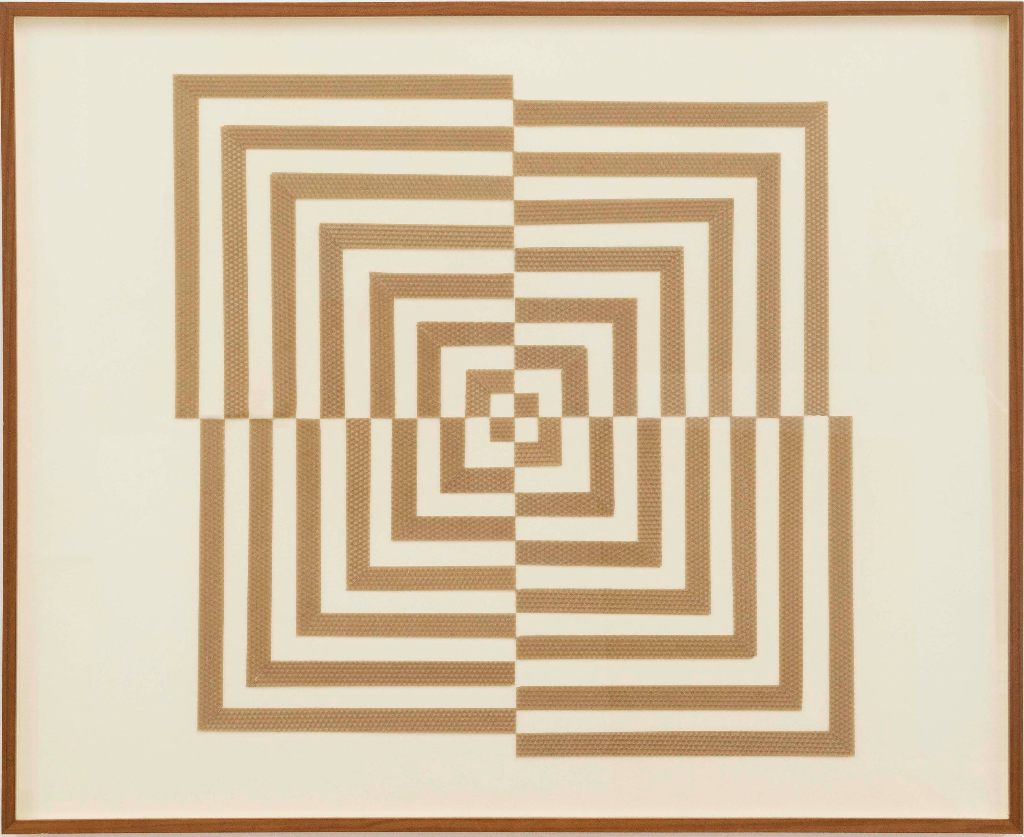
The artist’s background in civil engineering is also evident in the geometry of the honeycombs. In the series of paintings “Studies for the Concrete Honey Movement, ” he uses sheets of wax and a honeycomb maker to create mathematical structures that engage directly with the 1959 Neoconcrete Movement.
Expanding her exploration of artistic movements, in “Meldrian, ” Siri makes a lighthearted allusion to the forms of Piet Mondrian (1872–1944). In this piece, she uses the natural color variations of wax from different species, without any artificial pigments.
Nature and technology also come together in the PRO-POLIS exhibition
Interactivity and technology take center stage in the exhibition through the creative use of QR codes—carved into beeswax! When scanned with a cell phone (yes, it’s possible!), they transport visitors directly inside the beehives! There, you’ll find more information about the lives of the bees that produced that wax.
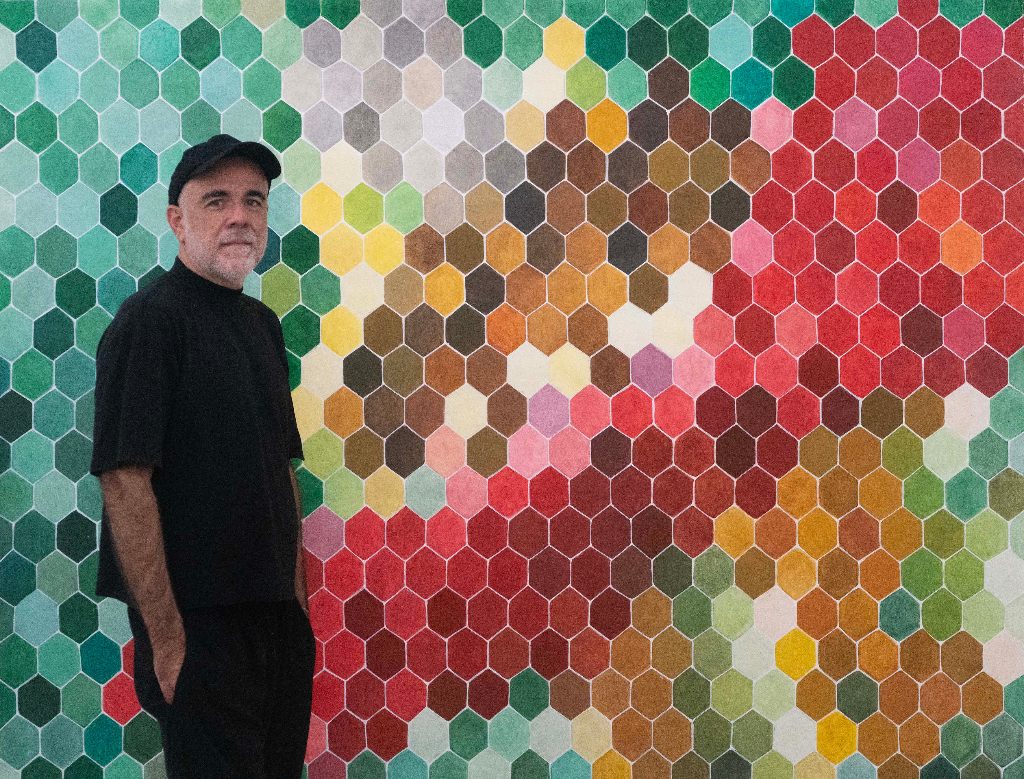
In other paintings made with propolis and pigments from flowers in the artist’s backyard, viewers are initially met with hexagonal shapes. However, when photographed, concrete images of a bee and a flower appear on the cell phone screen .
According to the artist himself, it’s a subtle play on the contemporary habit of documenting everything through screens, serving as an invitation to “pollinate” visitors’ perspectives!
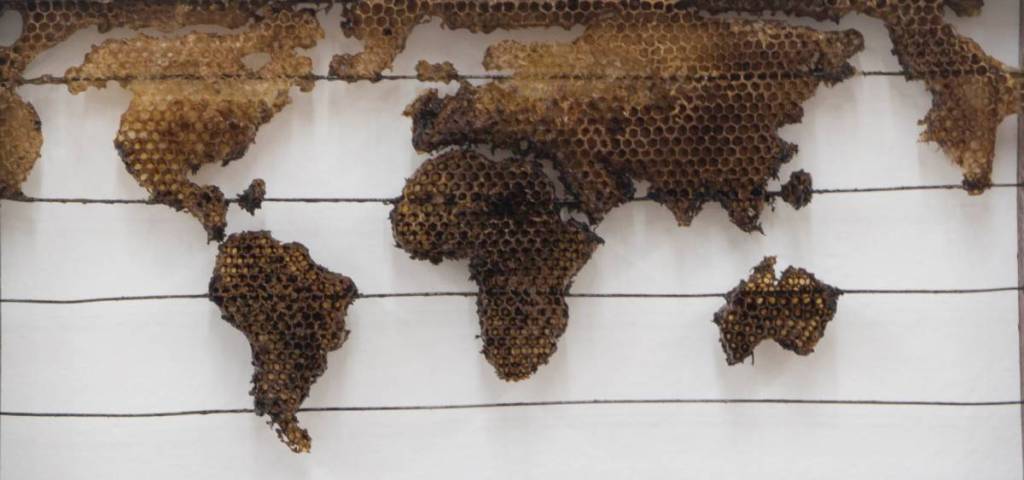
The exhibition also features works that use world maps made from foreign beeswax found in Brazil, paying homage both to these species and to patterns of human migration, including the artist’s own grandparents.
To complete the immersive experience, the space displays structures shaped like beehives, made of rope and wax, further exploring Siri’s long-standing research on nests.
With free admission, the PRO-POLIS exhibition will run through August at the City Historical Museum, offering a unique opportunity to view art through the lens of biodiversity!
“PRO-POLIS” Exhibition
📍City Historical Museum | Estrada Santa Marinha, s/n – Gávea
📅June 27–August 22
🕛Tuesday through Sunday, 9 a.m. to 4 p.m.
💵Free admission